


EDE 4941 SUPERVISOR/CT REFLECTION 2 & EDP 3273 REFLECTION 10
- Darby Bernaldo
- Nov 15, 2017
- 10 min read
The management routine that was required for the second Supervisor/CT observation was plan and implement a read aloud. The CT does a read aloud with the students every day. She introduces the book and tells the students their objective for this lesson. Throughout the reading, she will stop and have the students answer questions together to better grasp the concept being taught. At the end of every read aloud, she has the students do an extension activity/assessment to see how much they understand from the lesson they were just taught. I made sure to model my read aloud exactly like hers because the students do not do well with change. I wanted to make them feel as comfortable as possible with me teaching the lesson.
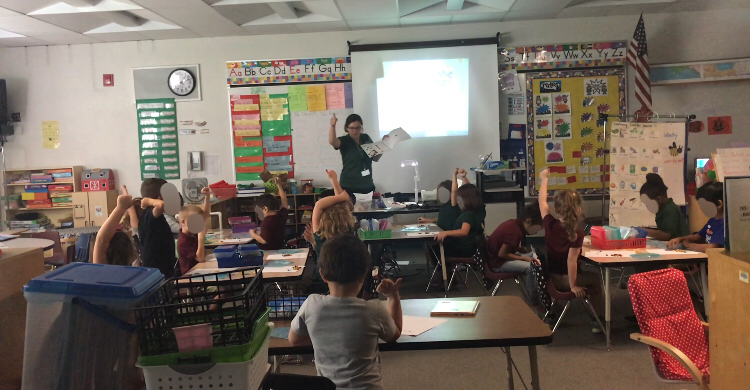
As the students were walking in from art, I asked them to sit down at their tables. I had already distributed the manipulative and papers needed for the activity on their tables. I got all their attention by saying "Class, class!" and the students responded "Yes, yes!" (0:09-0:10). I told them we would be reading the M&M Counting Book and reviewing numbers 1-10 while learning about more/less than with M&M's for our lesson (0:12-0:38). The students were already distracted by the M&M's and students began to touch them and pretend to eat them through the bag (0:41). I had the students guess how many M&M's they thought were in the bag and how many of each color as well. After documenting this, I asked the students to pour the M&M's on their white paper. I had to grab their attention back to the lesson multiple times. One of my ESE students called out during the middle of me giving more instructions (2:54). After I got all the students quiet again, I began to read the book. As I was reading, students were recognizing colors and words on the pages and yelling out what they saw (4:07). I made sure to show an example of what they were to be doing on the ELMO projector. I still walked around the room and helped students who were struggling (5:06). A few minutes into the lesson, I told the students to give me a thumb up when they are ready (6:13). This helped me make sure I was not leaving anyone behind. I continued to tell the students to lower their voices, but this did not stop them from yelling out whenever they wanted. I began to name drop students that were listening to my directions and it seemed to help a little (7:17). I continued to read and the same ESE student from earlier yelled for help again (8:45). I walked over to her as quickly as possible because I could tell she was going to have a meltdown. After we finished reading about the numbers to 10, I had the students make shapes with their M&M's. I knew this was going to be a little challenging, but I was surprised with how well the student did. Students that already completed a shape went over and helped other students that were not understanding (11:14). I was pleasantly surprised by this. One students began to cry because he got frustrated when making a circle, but I helped him, and he immediately stopped (14:19). After completing the shapes, I began to lose the attention of the students and it got slightly out of control. I got the students attention back on me and began to give directions for our extension activity (17:50). Even though the students were still a little wild, they were listening to the questions I was asking from the activity and raising their hand to give me the answers (this is where the video cut out). After every question, I would write the answer the paper and project it on the ELMO for everyone to see. Students that were not understanding kept raising their hands but to my surprise, their fellow classmates began helping and explaining it to them. This gave me extra time to work with the ESE students. I had to trace over the words, so they could complete the lesson properly. Once the activity was done, I collected their papers and sent each table to go put their M&M's in their backpack to take home.


The aspect of my lesson that was implemented differently than I had planned was the extension activity. I wanted the students work individually and come up with the answers on their own but as time went on, they decided that they would rather work together. They did a lot better with answering the questions collaboratively. The students vary in academic levels and needs. This separates them from each other immensely, but they surprised me with how well they collaborated as a table to get the right answers.
If I were going to teach this lesson with the same group of students, I would make sure the student work individually instead of together as a table. I enjoyed watching them work together but I want to see where they are individually and if they know the answers and can use their thinking skills on their own. Something I would do the same is have the students model everything on their own instead of just on the ELMO projector. Having them be able to touch the manipulative and see it in front of their face, it made it easier to grasp the concepts of the lesson. This was particularly helpful for my ESE students. They are all too young to have IEPs so the CT and I have to make sure we accommodate our lessons in the best way to help them.
The Individuals with Disabilities Education Improvement Act of 2004, also known as IDEA, is “a federal law that provides special education funding for 13 categories of disabilities” (Durwin & Reese-Webber, 2017, p. 463). This law is such a positive in the life of these disabled and/or struggling students. It ensures that they get the help that they need if they meet the criteria to be eligible for special education. The disabilities from this list that I see in my classroom are speech or language impairments, intellectual disabilities, emotional disturbance, and other health impairments. I believe that as time goes on that these students will be diagnosed with specific learning disabilities, but it is too early in their lives to tell just yet. How can we make the proper accommodations in the classroom for undiagnosed students?
Individualized Education Plans, or IEP’s, “outline curricula, educational modifications and provision of services intended to enhance or improve the students’ academic, social, or behavioral skills” (Durwin & Reese-Webber, 2017, p. 465). One thing that I noticed is that IEP’s are not given out in kindergarten. My CT has sat through multiple IEP meetings with parents of students in her classroom, but the ESE representative always recommends giving the student another year of normalcy to see how they do. Although I believe in giving these students a chance, nothing positive is coming from it in my internship classroom. Kids are not getting the resources they need and are continuing to fall behind as the days go by. Is it normal for kindergartners to not get the IEP that they need? And if so, what is when way we can change that?
The students learned what was intended of them exactly how I planned. I know this because they completed the extension work sheet properly and either understood, or got the help from a fellow classmate to better understand what was being asked of them. My teaching actions were effective by making sure all the students were, overall, on the same page and completed the extension activities with little to no questions after words for me or the CT afterwards. My instructional materials were effective because they each got their own M&Ms that they could manipulate and use for reference. This was a better idea than having a table share M&Ms or only having them look on the ELMO. I believe this is what helped them understand the lesson to the potential that I expected them too. I had to accommodate this lesson for four students. All four of them are considered ESE and the CT is in the process of getting them looked at for an IEP. I accommodated them into my lesson by tracing the words on their extension activities, so they could write it themselves after coming up with the correct answer. I also check on them every so often to make sure that they are on task, following the lesson and not left behind by their other classmates. The learning environment plays a role in the response of these students by an open environment for all everyone to help each other when they are learning. I love how much the students want to help each other.
Surprisingly, almost all the students had difficulty during the lesson in their own way. Some were not grasping the concepts of the lesson, some were not being patient, some could not focus, and the rest were just extremely disrespectful and all over the place. After discussing how the lesson went with my CT, she believes that these children were hyped up on Halloween candy and it’s hard to compete with that.
My group of students that did especially well in this lesson are the usual above-level students. They have no problem with understanding the expectations of the lesson being presented and just run with it. They even finished theirs a head of time and helped all the other students that were struggling. It was cool to see how much help they were to their fellow classmate, how receptive these classmates were to the help, and how quickly they grasped the concepts of this lesson after being helped by their friends.
The next steps with these students are continuing to work on grabbing their attention and keeping it one hundred percent of the time and working with challenging behaviors. Both of these things will help me in controlling the classroom environment better at all times. The information for this action will be useful in the future because I know now that the students prefer working in groups. If there is something that I need them to do individually, I will have to make sure they understand not to help anyone and set folders up dividing each student.
My performance impacted the students by really getting them excited and into the lesson. This can be seen when I asked the students to look at their bag of M&Ms and one student yelled out, “I’ll take a look at the M&Ms!” (0:38). From my point of view, they were all that eager about this lesson, but this student was the one that truly showed it on video. Another impact that my performance had on the students was that they were more inclined to talk when I was giving directions. Even though, I was not expecting this to be a quiet lesson, it got out of hand on quite a few occasions and I had to tell them to settle down or be quiet (0:07, 1:48, 2:20, 2:24, 4:30, 5:49, 6:18, 6:24, 10:25, 10:29, 13:24, 16:59). Overall, I believe that I got my desired result. All the students completed the extension activity and got the proper help that they needed either from me, or one of their fellow classmates. I was so impressed with how some of the students stepped up to help each other (I would reference a time, but it is after my video accidentally cut off). I think that the way that I gave the students the directions and expectations of this activity is what led to my success of getting the desired result (0:12-0:38 & 16:31-16:54).
I believe that the sorting of the M&M’s (1:34) and the extension activity (not captured unfortunately) went very well. This all went well because the students were helping each other out to complete what was asked of them. It was awesome to see how much they all can rely on and learn from each other. What did not go well was trying to keep the student’s attention one hundred percent of the time (0:07, 1:48, 2:20, 2:24, 4:30, 5:49, 6:18, 6:24, 10:25, 10:29, 13:24, 16:59) and keeping some of the ESE students from originally getting frustrated during the extension activity (not captured). The students were so excited about working with M&Ms and each other and my ESE students have little to no patience so therefore, they got frustrated off the bat. When I showed someone attention before them, they acted as if I was never going to help them and they pitched a fit. This also set off some of the other students. The developmental level of my students impacted how I planned the lesson by making sure that we only went up to the number 10 and conveying everything that was to be expected out of them (0:12- 0:38). If you do not set clear expectations for students of this age, nothing will be completed by the students to the standard that you want.
The FEAPs that I successfully completed during this lesson is 1a, 2c, and 5a. I completed 1a by matching the appropriate state math standard and completing the lesson to the level that the students are capable. I completed 2c by conveying high standards to the students when giving them the directions of the lesson and assessment (0:12-0:38 & 16:31-16:54). Lastly, I conveyed 5a by discussing where I should move forward next with my CT regarding future lessons and classroom management. I will continue to practice demanding the student’s attention and handling challenging behaviors.
The most important things that I learned by engaging in this lesson is that students are always looking to help their friends. I wanted the students to do the assessment on their own but when classmates were struggling, certain students stepped up to the plate to help if I was helping others at that time. It was cool to see how well the others picked up the lesson after only being taught by their fellow classmates. This task did not totally meet the needs of my students because I did not take how excited or talkative they would be into account. I had to keep getting their attention multiple times (0:07, 1:48, 2:20, 2:24, 4:30, 5:49, 6:18, 6:24, 10:25, 10:29, 13:24, 16:59) and when I did, it didn’t last for long. I will engage in this lesson differently next time by separating the students and not having them collaborating as much during the beginning part of the lesson. I believe it got too loud and unmanageable at times. When separating the students, it will give them less instances to communicate with other and that equals to less noise in the classroom when I am teaching the lesson to them.
Durwin, C., & Reese-Weber, M. (2017). EdPsych (6th ed., pp. 463 & 465). Thousand Oaks, California: Sage Publications, Inc.


Comments