


EDE 4944- Supervisor Observation Reflection #1
- Darby Bernaldo
- Oct 4, 2018
- 7 min read

Time Celebration/Struggle/Question Claim about teaching practice
11:36
P. struggled to solve the problem in front of the class
Putting students on the spot, especially ones who do not show things as clearly, only gets the other students confused and you waste a lot of instruction time.
14:40
All students are properly solving the problem on the board, even though P. is still struggling to come up with the complete answer.
This shows me that the students are starting to grasp the concept and are paying no attention to the classmate struggling on the board.
15:47
N. brought up a good point to help P., so she went up to the board to help, but he continued to refuse it.
Students want to constantly help each other which is refreshing. My student with autism refused the help but it was refreshing to see someone understand and try to help.
21:21
After being prompted once, students transitioned to their activity quietly.
Even though our schedule was completely thrown around, the students were starting to adjust well and calm down. This shows me that they students need the structure and I need to expect chaos if they are thrown off.
24:37
Students in the other groups struggled to get started. They were really confused and needed more instruction.
Explicit instruction is so important to student understanding. I did not leave good enough instructions, so it took the students a while to get established in their different activities.
26:17
J. constantly did not try and complained
The student had already shut down and this point and refused to work. As a teacher, all I can do if continue to encourage and push the student to succeed.
32:22
A.J. was on her game completely, answering every question accurately.
It was refreshing to see that they activities was bringing out the prior knowledge that a student already knew and was helping her other group mates recall the information to be successful in the activity.
37:26
Students struggled to see the Learning Problems paper and then got distracted by the camera not to far away from where it was placed.
I need to make sure that the students have copies so they are not arguing about what they are supposed to be doing. Also, making sure the camera was covered would have solved a lot of the issues of students getting off track, staring at the camera or dancing throughout the lesson.
41:25
J. refused to try any of the problems on his own. He constantly tried to bring attention to himself and distract others.
At this point, I should have separated J. from everyone else. He was doing more harm than good. I believe I was trying to give him the benefit of the doubt instead of yanking him from the group.
42:26
As a class, we decided not to switch to our second activity and continue to work on the first one.
This allowed me to see that sometimes students’ needs will not always align with your lesson plans. Giving students this extra time helped with mastery and student understanding which is my goal.
43:17
Students in the AK group came up with their own amazing extension idea of creating and solving their own word problems.
This higher order thinking is exactly what I’m wanting my students to grasp on too. This helps me understand how I need to push them content wise in my next lesson.
46:33
I had to separate J. from his group and make him work on his own due to his distracting nature.
You must separate students that are being a constant distraction for others. No one will learn anything.
54:43
Students transitioned silently back to their seats for the self-assessment, journal, and formative assessment portion for the lesson.
Once students get settled, it is easy to continue with normal expectations and they should be rewarded for this positive behavior.
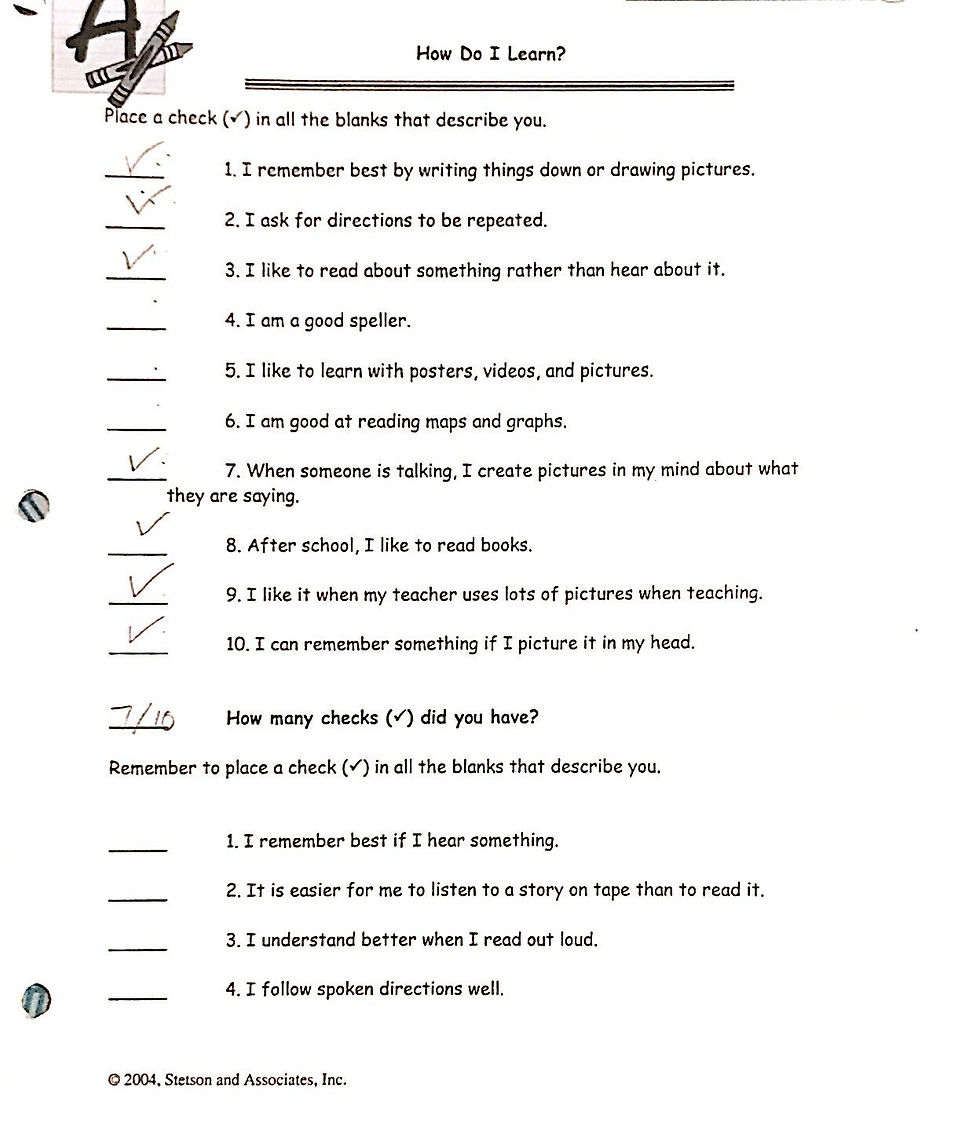
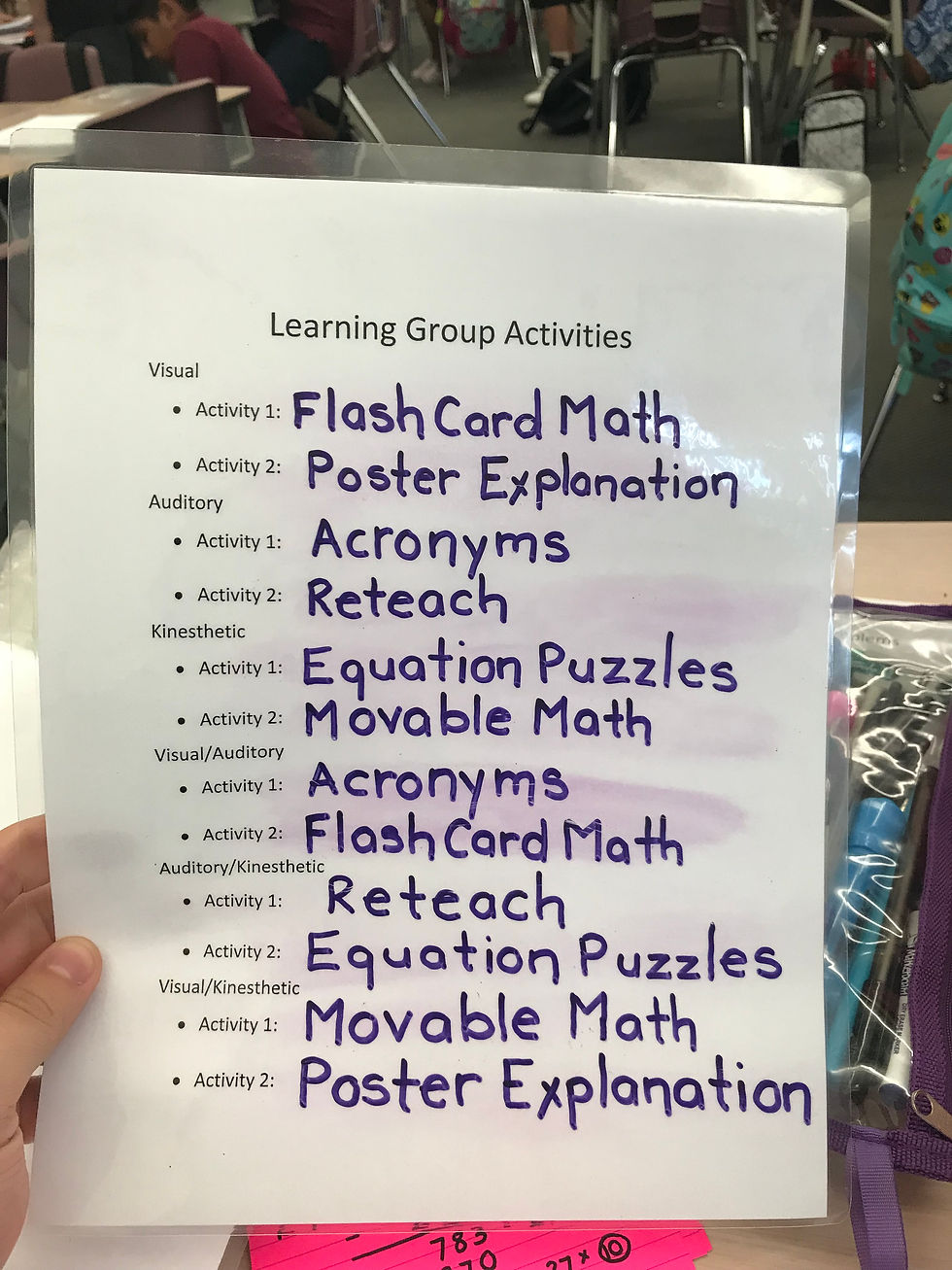
For my first observation I did a partial quotients review with my homeroom class. The premise of this lesson was differentiated instruction. The specific differentiated instruction strategies used in the lesson were small groups. The small groups purpose was to break the students up based off their VAK learning style and were given differentiated activities to help the understand the content better. The differentiated assessment that I used was allowing students to use their previous notes to answer the questions asked. This gave students the option of attempting the assessment on their own or looking back to prior notes to help them succeed and receive a passing grade. Students struggled to get started in their small groups (24:37) but I believe that over time students will become more successful with this concept.
I assessed how the lesson impacted the students by taking their assessment scores and comparing them to their previous assessments on division. There was a little bit of growth, but the students still have a lot to learn before they become experts. What was unfortunate was that certain students self-assessed themselves as experts when they were nowhere near that yet (54:43). What worked was giving the students the different activities that were fit to their learning styles. What I would change was only telling the student about one activity. They knew that I had a lot planned for them but unfortunately, they were unable to even complete the first one to the acceptable level of mastery (42:26). This caused a lot of students to try to rush through their different activities. Next time, I will only tell the students I have one activity planned so they will focus on mastering that one before thinking they need to move on to the next one.
The students who had difficulty with the lesson was P and the visual learners. At the beginning of the lesson, P was solving a problem on the board. Being an AGP student, he was trying to show off for the rest of the class but that only took up more time. I tried to diffuse the situation by having N go up to the board and help him. He refused her help and tried pushing her out of the way. Instead of drawing attention to the situation I decided to go ahead and break into small groups instead of finishing the problem. I believe this was the best way to handle the situation. The visual learners were the other group that struggled. Throughout the video, you can see that they refused to work together and listen to the directions, so they were lost before the timer even started. I account for this performance by realizing that I gave them an out by not giving them better, written down directions and explaining what would happen if they did not participate. They were able to use this as an excuse instead of them saying that they did not listen, care, or want to do it. I will help these students achieve the learning objective by allowing them to work individually and giving the better directions. By doing these things, I take away the students excuses and give them a better environment to learn.
The students who did especially well in this lesson are the kinesthetic/auditory learners. Once they got their instructions they hopped right on their assignment and never looked back. They even completed their assignment before everyone else and they came up with their own extension of writing their own word problems and then solving them (43:17). I account for this performance by being flexible and allowing them to choose an extension that they believe would work best for them. I believe their self-motivation helped push them to do their best.
If I was going to teach this lesson again to the same group of students, I would only give the students one activity and make sure they master it before moving on. Also, I will give the students better written directions so they if they were to get lost or confused they directions would be spelled out clearly for them. Some of my students lack the self-motivation to push themselves to do their best so by making these little adjustments, I’m giving them no choice but to do their best or to suffer the consequences (24:37).
Something I would do the same would be the learning style groups. I believe that if the students were to continue to do work in these groups, we will see more and more growth over time. I would do this because these students can learn a lot through each other, progressing more rapidly since we are already behind on the county calendar. If they do not start doing better soon, the students might get too behind to successfully catch up.
Based on what happened in this lesson, I plan to teach this lesson again next week with similar activities. We were so happy that progress was being made last week that we want to continue to build upon it so by modifying the activities, I believe it will help them more. I will use the information from this evaluation in future lesson planning by making sure I take one step at a time with these students. By making the learning environment better planned out and making the students feel like they have a say, I believe this will help them in future lessons to better master the different content taught throughout the year.
The FEAPs that I accomplished during this lesson are 1d, 1e, 3c, and 5b. I accomplished 1d by selecting an appropriate formative assessment to monitor learning. I allowed the students to self- assess themselves before taking the five-question quiz, so I can compare how they feel to their actual work. This will help me monitor their learning throughout the end of this unit going into the next one since they are sequential. I accomplished 1e by using the variety of data (VAK), individually and in collaboration with colleagues to evaluate student learning outcomes and adjust my future planning and effectiveness of lessons. I met with my CT and another fellow intern and discussed the data that I received through this assessment. Through this, we were able to pin-point what was effective and what was not to help plan future lessons to boost my inquiry and student learning. I accomplished 3c by identifying the gaps in student subject matter knowledge through prior assessments and then planning activities that target their struggles with their learning style groups. Lastly, I accomplished 5b by I examined and used data-informed research to improve instruction and student achievement. Through the data that I collected, I was able to go back through it and identify how I could better improve my instruction for future lessons. Student achievement is the biggest thing that I took away from the data and I now have new activities and new strategies for each group that will better help them learn.



Comments